
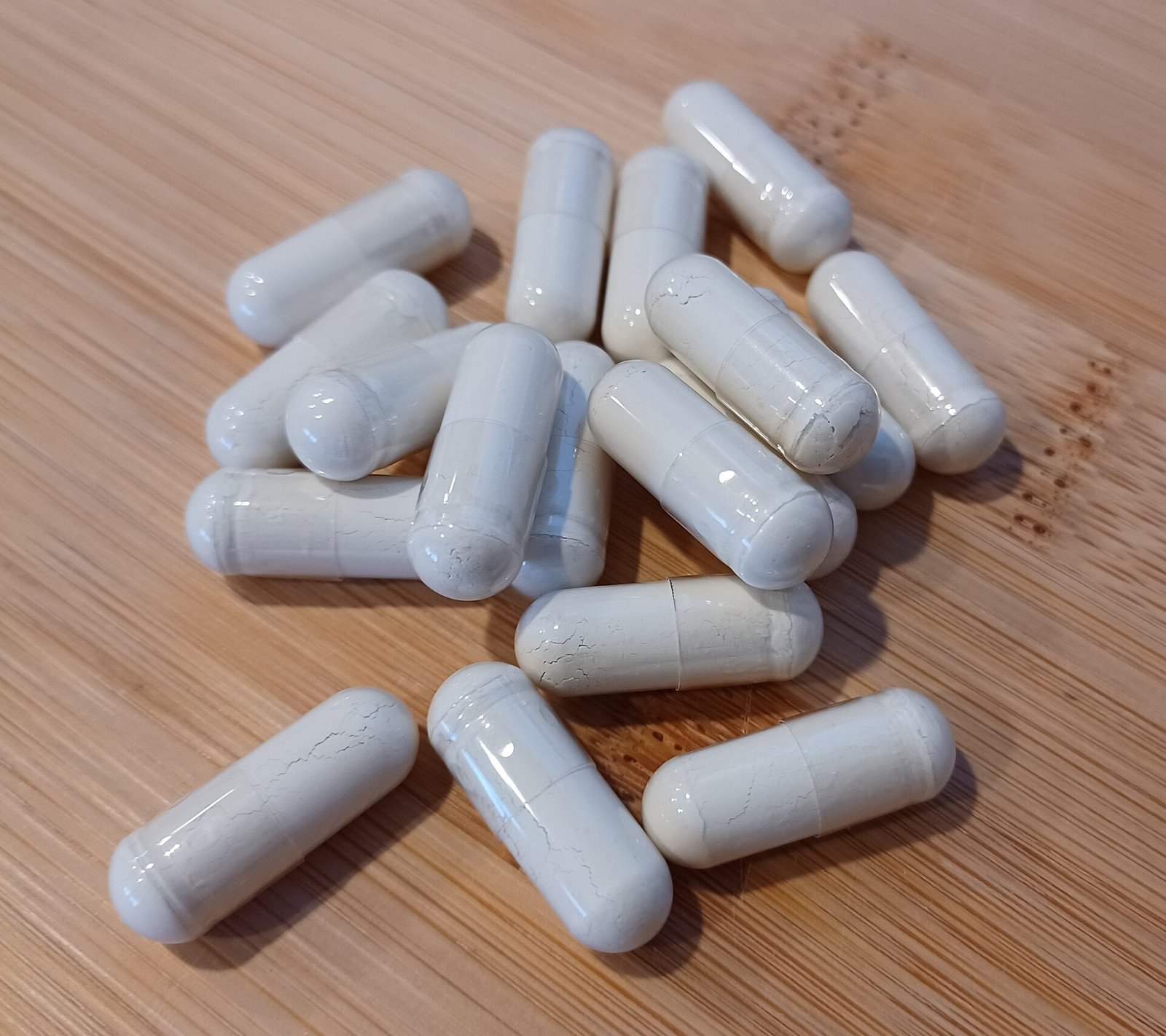
Description
Calcium as microcrystalline hydroxyapatite, which is whole bovine bone matrix rather than an isolated salt. Four capsules make the serving and the bottle holds 60 servings. The distinction is real: in microcrystalline hydroxyapatite the calcium arrives in the crystal it occupies in bone, accompanied by the phosphorus, the collagen protein and the trace minerals that sit alongside it, instead of as a carbonate or citrate salt manufactured separately.
What is in the serving
| Material | bovine bone, milled to a microcrystalline powder |
|---|---|
| Calcium | stated as elemental milligrams on the panel |
| Phosphorus | present natively, stated separately |
| Protein | bone collagen, retained by low temperature processing |
| Serving | four capsules, 60 servings per bottle |
| Source | origin country documented on the certificate |
| Cost | about 53 cents a serving |
Why four capsules, and why that is the honest number
Bone matrix is bulky. The calcium fraction of microcrystalline hydroxyapatite is lower than that of calcium carbonate, which is around 40 percent elemental, so reaching a useful figure takes volume and volume takes capsules. A bottle that promised the same calcium in one capsule would either be a denser salt or a smaller amount.
Units per serving and servings per container are printed next to each other on this listing, which is the rule across the joint and bone page, because a 240 count bottle at four capsules a serving is two months rather than eight. That one piece of arithmetic changes the price of half this category.
What the research used
The published trials in this area generally studied an ossein hydroxyapatite compound, supplying roughly 700 to 1,200 mg of calcium a day over one to three years, with bone mineral density by densitometry as the measured endpoint, and several compared it directly against calcium carbonate. That is a description of what those studies administered and measured, not a claim about this bottle, and the amount per serving is printed so you can place it against those figures yourself.
Microcrystalline hydroxyapatite against bone meal, and against algal calcium
Bone meal was sold for decades as a calcium supplement and acquired a poor reputation for lead content, which is the single most important reason a metals panel belongs on anything bone derived. Microcrystalline hydroxyapatite is a controlled, low temperature processed material rather than ground bone of unknown origin, and the lead figure for your lot is on the certificate rather than in a reassurance.
The plant alternative is algal calcium, usually from Lithothamnion seaweed, which carries magnesium and trace minerals instead of phosphorus and protein. It is the option for anyone avoiding animal material. Neither is a better buy in the abstract: they are different compositions at different elemental percentages, and both are priced here per milligram of elemental calcium so the comparison is honest.
What a microcrystalline hydroxyapatite certificate shows
Three figures matter. Elemental calcium, which is what you are buying. Phosphorus, which comes with it and which no isolated salt carries. And lead, cadmium and arsenic, which is where a bone material either passes or does not. All three are on the published report for every lot, along with microbial screening and the documented source country.
Sourcing, stated rather than implied
This is an animal derived ingredient, so the source matters and we document it on the certificate rather than describing the cattle in adjectives. Anyone avoiding bovine material for dietary or religious reasons should buy a plant based calcium instead, and the minerals page lists the citrate and carbonate options with their elemental percentages.
Phosphorus, which most calcium products ignore
Bone is roughly two parts calcium to one part phosphorus by weight, and microcrystalline hydroxyapatite carries both because it has not been taken apart. Whether that matters to you depends on the rest of your diet, since phosphorus is abundant in most Western eating patterns. The figure is printed either way, which is more than an isolated salt can tell you.
Testing
Every lot of microcrystalline hydroxyapatite is assayed for calcium and phosphorus content by an outside laboratory and screened for heavy metals and microbials, with lead the figure to read first on any bone derived material. Under specification lots are withdrawn and their certificates stay published. Recommended intakes and food sources are set out on the NIH calcium fact sheet, and your lot certificate is linked above.


Reviews
There are no reviews yet.