

Description
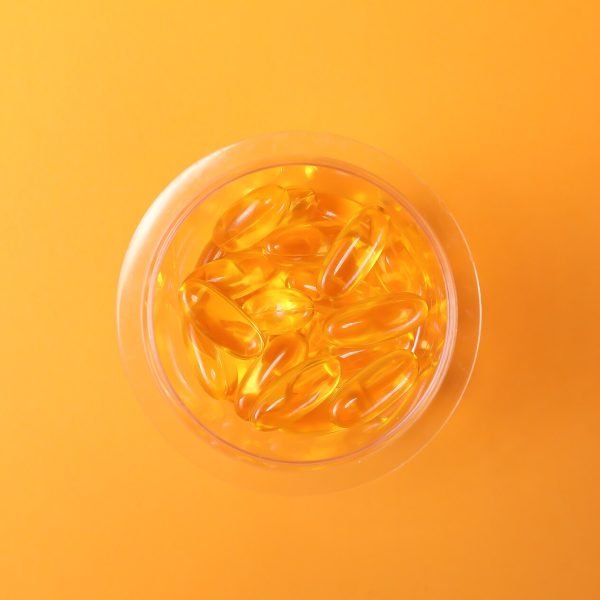
Borage oil at 1,000 mg a softgel, standardised to 24 percent gamma-linolenic acid, 60 servings at about 43 cents each. Twenty four percent of 1,000 mg is 240 mg of GLA per softgel, and that is the figure worth carrying between labels. Borage oil holds the highest GLA content of the seed oils, roughly double evening primrose, which means fewer softgels for the same amount of the fatty acid.
The numbers that matter
| Oil | 1,000 mg per softgel, from Borago officinalis seed |
|---|---|
| GLA | 24 percent, about 240 mg per softgel |
| Evening primrose comparison | around 9 to 10 percent GLA, so 90 to 100 mg |
| Servings | 60, about 14.4 g of GLA per bottle |
| Cost | about 43 cents a serving, near 1.81 dollars a gram of GLA |
| Screening | pyrrolizidine alkaloids tested on every lot |
| Class | an omega-6 fatty acid, not an omega-3 |
Borage oil against evening primrose, in arithmetic
Both oils are bought for the same fatty acid and they are priced per softgel rather than per milligram of it, which hides the comparison. At 240 mg against roughly 95 mg, one softgel here replaces two and a half of the alternative. A bottle of 60 evening primrose softgels at a lower price can therefore be the more expensive purchase once you divide by GLA.
That division is printed under the price on every listing, for the reason set out in why price per milligram beats the price on the bottle. The evening primrose version sits on the women’s page with its own percentage stated.
The pyrrolizidine alkaloid line on a borage oil certificate
Borage leaves and seeds contain pyrrolizidine alkaloids, a class of compounds with documented liver toxicity, and the alkaloid content of a finished oil depends entirely on how carefully the seed was cleaned and the oil processed. This is not an exotic concern. It is the test that matters most on this particular oil, and the result for your lot is on the published certificate.
Why borage oil is sold in softgels rather than by the spoon
The oil is bland rather than unpleasant, so taste is not the reason. Oxidation is. A polyunsaturated oil in a part used bottle meets air every time the cap comes off, and a sealed shell keeps the dose away from it until swallowing. The cost of that protection is the shell and the encapsulation run, which is why borage oil costs more per gram in a softgel than in a bottle of liquid.
Seed oil, and why borage oil is not borage leaf
This comes from the seed. Leaf and flower preparations of the same plant carry far more pyrrolizidine alkaloid than cleaned seed does, which is the reason borage tea carries warnings that a borage oil softgel does not. Anyone who has read about one and assumed it applies to the other is reading across two different plant parts, and the plant part line on the panel is what separates them.
Where the research dose sits
The GLA trials with the most measurement behind them administered 1.4 to 2.8 grams of the fatty acid a day for six months or longer, recording joint tenderness counts, swollen joint counts and grip strength in rheumatoid arthritis protocols. At 240 mg per softgel, the lower end of that range is roughly six softgels a day.
Describing what a trial administered and measured is not a claim that anything happens at that dose or at the one on this label. The arithmetic is printed because a buyer who has read a summary of those studies would otherwise assume a single softgel matched them.
Omega-6, stated plainly
GLA is an omega-6 fatty acid. It is not an omega-3 and it does not substitute for EPA or DHA, which are different molecules with a different literature. If what you want is EPA and DHA, the fish, krill and algal oils on the omega and fats page are the correct shelf.
Testing
Every lot is assayed for GLA content and oxidation parameters by an independent laboratory, with pyrrolizidine alkaloids, heavy metals and microbials on the same certificate. Under specification lots are withdrawn and the failing report stays public. For intake references and a summary that sells nothing, the NIH Office of Dietary Supplements fact sheet library is free to read, and your certificate is linked above.


Reviews
There are no reviews yet.